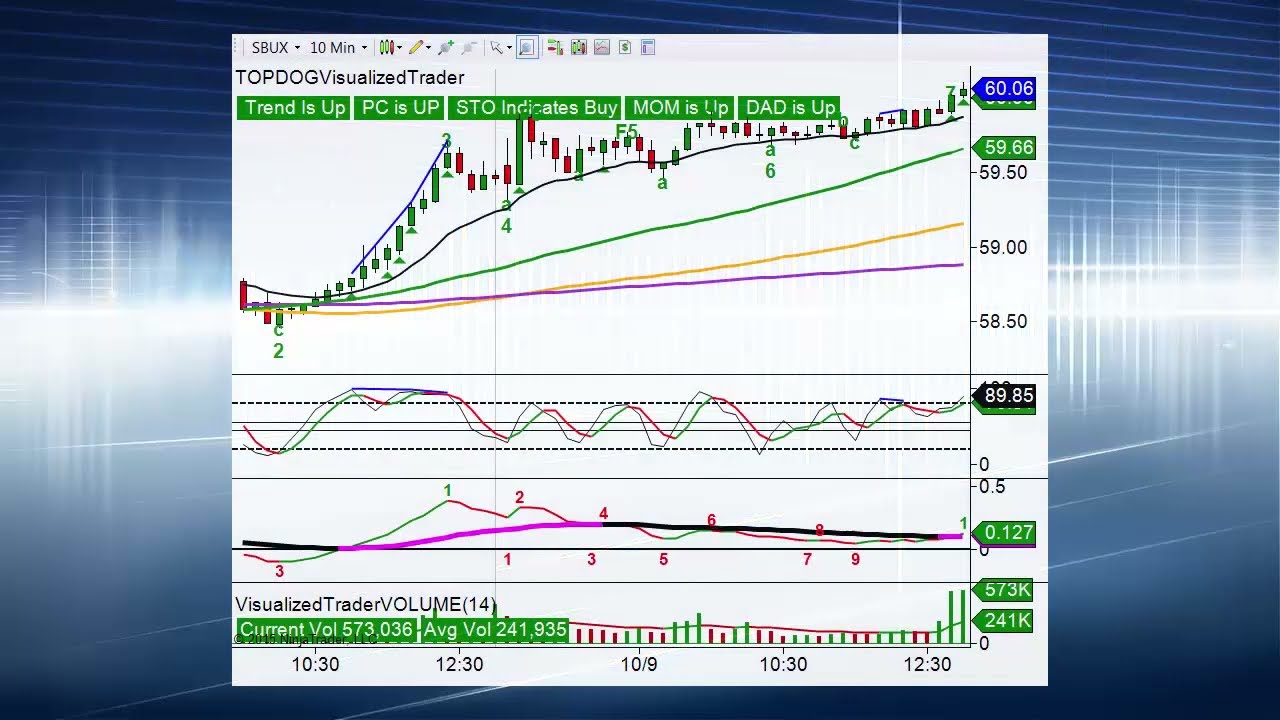
In the complex and dynamic world of trading, understanding market cycles is a powerful advantage. The Cycle Indicator from Top Dog Trading has gained attention for its precision and adaptability across various markets. As seasoned professionals, we understand that mastering cycle analysis can be the difference between consistent profits and costly guesswork. In this guide, we will dive deep into how the Cycle Indicator from Top Dog Trading can be effectively used to time entries and exits with unparalleled accuracy.
What Is the Cycle Indicator by Top Dog Trading?
The Cycle Indicator developed by Dr. Barry Burns, the founder of Top Dog Trading, is a proprietary tool designed to identify repeating market cycles. These are natural rhythms in price action that occur due to psychological behavior of market participants. The indicator adapts to different timeframes and instruments, whether you trade forex, futures, stocks, or crypto.
At its core, the Cycle Indicator analyzes momentum shifts and phase transitions in the market to identify predictable turning points. Unlike lagging indicators like MACD or moving averages, it provides traders with a forward-looking perspective.
Why Market Cycles Matter in Technical Analysis
Cycles are recurring patterns that represent the collective psychology of buyers and sellers. These can range from short-term intraday cycles to long-term macroeconomic cycles. The Cycle Indicator helps isolate these rhythms so traders can align with the natural flow of the market, instead of fighting against it.
Key benefits of identifying market cycles include:
- Precise Entry and Exit Points
- Improved Risk-Reward Ratios
- Better Timing for Trend Reversals
- Confidence in Trade Execution
Top Dog Trading’s Five Energy Methodology
The Cycle Indicator is part of the “5 Energies” trading system created by Dr. Burns. These energies are:
- Trend
- Momentum
- Cycles
- Support & Resistance
- Volume
The Cycle Indicator specifically focuses on the third energy – Cycles. By synchronizing with the other four energies, it allows traders to spot high-probability trade setups. This holistic approach is what makes Top Dog Trading’s tools unique in the world of technical analysis.
How the Cycle Indicator Works in Practice
The Cycle Indicator scans price action and dynamically adjusts to detect cycle highs and cycle lows. This enables traders to:
- Identify when a market is overbought or oversold
- Enter trades before a breakout or reversal occurs
- Avoid getting trapped in false signals from lagging indicators
- Exit positions at optimal cycle peaks or troughs
When used in conjunction with other Top Dog Trading strategies, such as the Rubber Band Trade or the Boomerang Trade, the Cycle Indicator becomes even more powerful.
Cycle Indicator Settings and Customization
One of the strengths of this tool is its adaptability. The settings can be customized depending on:
- Timeframe: Works on 1-minute charts to monthly charts.
- Volatility: Adapts to quiet vs. highly active markets.
- Asset Type: Suitable for equities, futures, forex, crypto, and options.
The indicator typically includes:
- Color-coded wave patterns
- Dynamic high/low cycle markers
- Cycle oscillators or histogram bars
Traders often use the Cycle Indicator alongside other Top Dog tools like the Momentum Indicator, Trigger Lines, and Volume Surge alerts.
Best Practices for Using the Cycle Indicator
To maximize the effectiveness of the Cycle Indicator from Top Dog Trading, here are several key strategies:
1. Align with the Higher Timeframe Cycle
Always start by identifying the dominant cycle on a higher timeframe. This prevents entering trades against the prevailing market rhythm. For instance, if you’re trading a 15-minute chart, analyze the 1-hour cycle first.
2. Confirm with Momentum and Volume
Cycle highs and lows should ideally be confirmed by a momentum shift or volume divergence. This improves the accuracy of your trades and reduces false entries.
3. Combine with Support and Resistance Zones
Look for cycle peaks or valleys that align with major horizontal support/resistance zones or Fibonacci levels. These confluences provide powerful trade setups.
4. Avoid Trading Mid-Cycle
The middle of a cycle often involves choppy price action and lower win rates. Enter trades near the cycle extremes for the best results.
Examples of Cycle-Based Trade Setups
Example 1: Long Trade at Cycle Low
- Asset: EUR/USD
- Timeframe: 1-hour chart
- Indicators: Cycle Indicator + Momentum + 20 EMA
- Setup: Price makes a double bottom at a previous support level while the Cycle Indicator marks a low. Momentum crosses bullish.
- Entry: Long at confirmation candle close.
- Target: Previous swing high.
- Stop: Just below the cycle low.
Example 2: Short Trade at Cycle High
- Asset: S&P 500 E-mini Futures
- Timeframe: 5-minute chart
- Indicators: Cycle Indicator + Volume Divergence
- Setup: Price spikes up on low volume as Cycle Indicator shows topping pattern.
- Entry: Short on bearish engulfing candle.
- Target: Mid-cycle mean reversion.
- Stop: Above the recent high.
Advantages of Using the Cycle Indicator Over Traditional Tools
- Faster response time than moving averages
- More accurate timing compared to RSI or Stochastics
- Real-time adaptability to changing market conditions
- Less noise and clearer signals for swing and day traders alike
Integrating the Cycle Indicator into Your Trading Plan
We strongly recommend incorporating the Cycle Indicator as part of a rule-based trading system. Here’s a simplified flow:
- Scan higher timeframes for trend and cycle direction
- Look for confluence on lower timeframes
- Confirm with momentum and support/resistance
- Use proper risk management (1-2% per trade)
- Track cycle behavior across multiple instruments
Keeping a trading journal of how the Cycle Indicator behaves in different conditions can also accelerate your mastery.
Conclusion: Why the Cycle Indicator by Top Dog Trading Is a Game Changer
For traders seeking precision timing, consistency, and a clear edge, the Cycle Indicator from Top Dog Trading delivers an advanced and reliable solution. By understanding and following market cycles, traders can avoid emotional decisions, reduce noise, and capitalize on natural market rhythms. Whether you’re a beginner or a seasoned pro, mastering cycle analysis will elevate your trading performance.